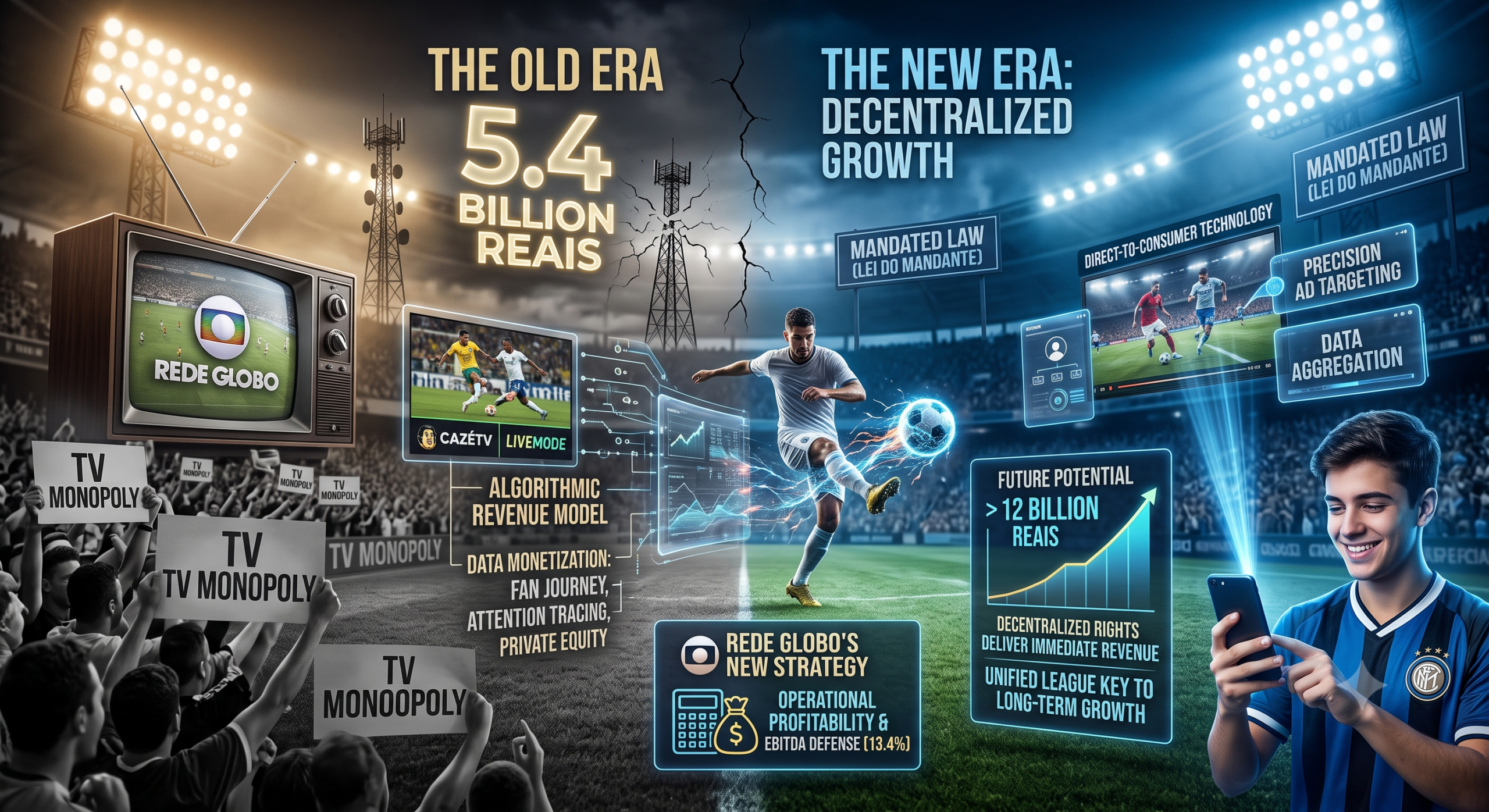
The Brazilian football broadcasting market is undergoing a quiet but profound structural mutation. The breakdown of the historic free-to-air television monopoly signals far more than simple screen fragmentation. The rise of sophisticated arrangements like LiveMode and CazéTV reveals a definitive transition toward an algorithmic economic model.
The old centralized dynamic protected the linear schedule of major national networks for mere commercial convenience. The approval of the Mandated Law permanently altered this domestic balance of power. Clubs gained the legal autonomy to negotiate their own intellectual properties directly with new global digital partners.
The domestic market value of these media assets reached an astonishing 5.4 billion reais in recent cycles. This sharp inflation occurs at a time of abundant on-demand content choices across digital platforms. Live sports retain the unique macroeconomic capacity to aggregate millions of emotionally invested viewers simultaneously.
However the true revolution lies in the automated control over live human attention. Digital platforms do not merely seek to replicate the traditional mass reach of conventional broadcast television. They pair free streaming access with complex systems of structured data and precision advertising targeting.
This highly verticalized business model tracks the entire consumer journey of the fan during the match. The viewing audience ceases to be a passive statistical mass. It becomes a traceable and instantly monetizable digital asset for private equity funds.
Rede Globo radically reconfigured its financial strategy in the face of this aggressive tech competition. The legacy media giant abandoned its long-held doctrine of acquiring every available tournament package. Current corporate decisions strictly prioritize operational profitability and the defense of core operating margins.
The network recorded a net revenue of 16 billion reais alongside an expanding EBITDA margin of 13.4 percent. This defensive posture reflects a calculated aversion to overpriced and inflexible long-term sports contracts. International precedents prove that purchasing media rights without guaranteed ad resale destroys corporate value.
The current decentralized environment delivers immediate revenue increases for members of competing club blocks. Conversely the lack of long-term institutional coordination restricts the ultimate ceiling of this growth. The ongoing absence of a unified national league fragments the core product and reduces global bargaining power.
The future of this multi-billion dollar ecosystem depends on establishing a truly professional corporate governance structure. The financial potential of domestic football could easily surpass 12 billion reais in future negotiation cycles. The ultimate victory belongs to whoever controls the technology of direct-to-consumer distribution.
Marlus Pasinato – 12/07/2026 – www.libertadores.com.br